Panora, IA · Serving Central Iowa 515-360-3148
★★★★★ 5.0 Rating — 24 Google Reviews

Before & After: A Master Bath Transformation in Johnston, IA

This master bathroom in Johnston, IA had good bones — a big footprint, natural light, a decent layout — but it was showing its age. A dated corner jetted tub nobody used, laminate counters, and oak cabinetry from a different decade. The homeowners wanted a full gut: a real walk-in shower, more counter space, and a room that felt current. Here’s what changed.

The Tub-to-Shower Conversion

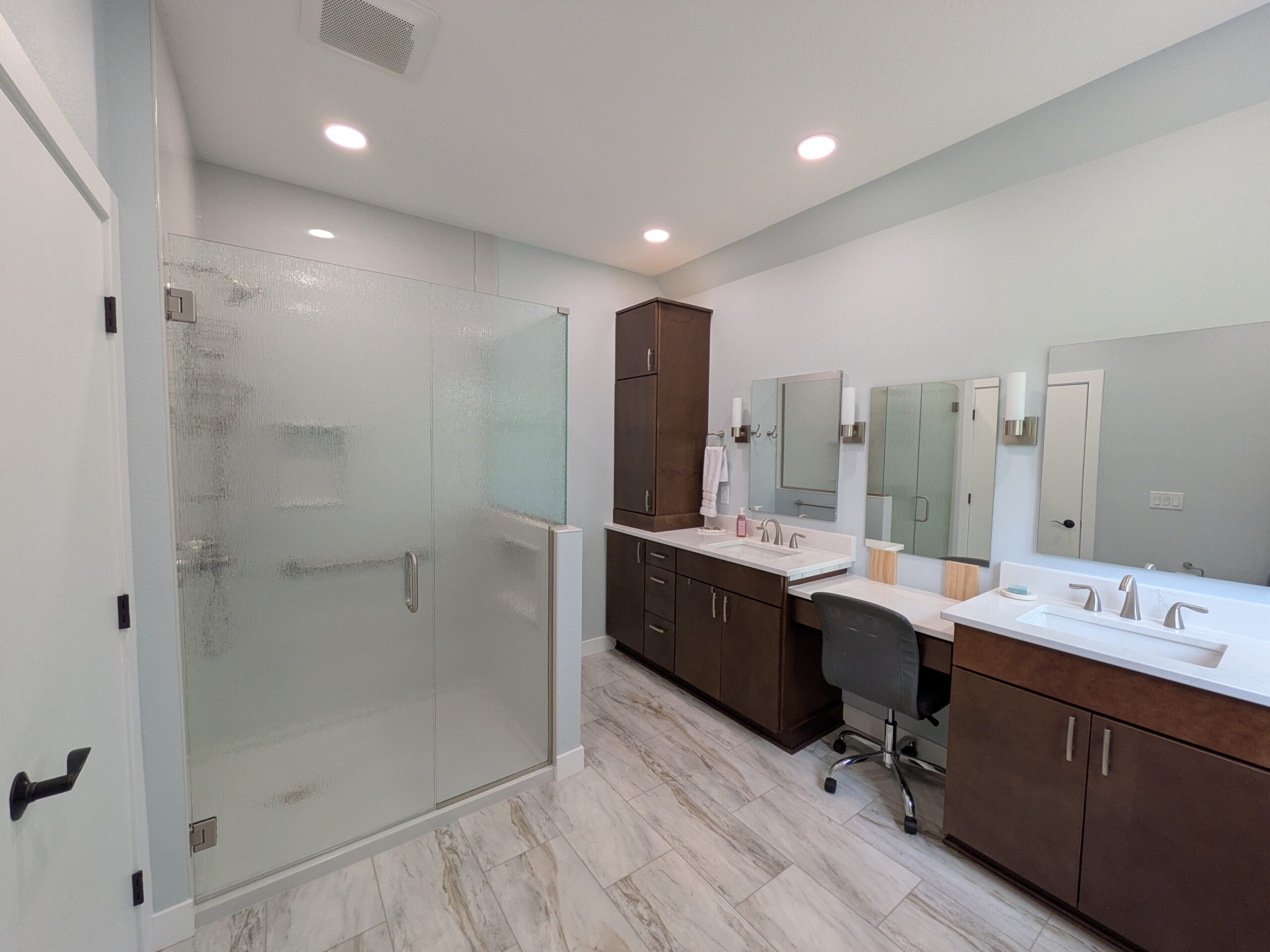
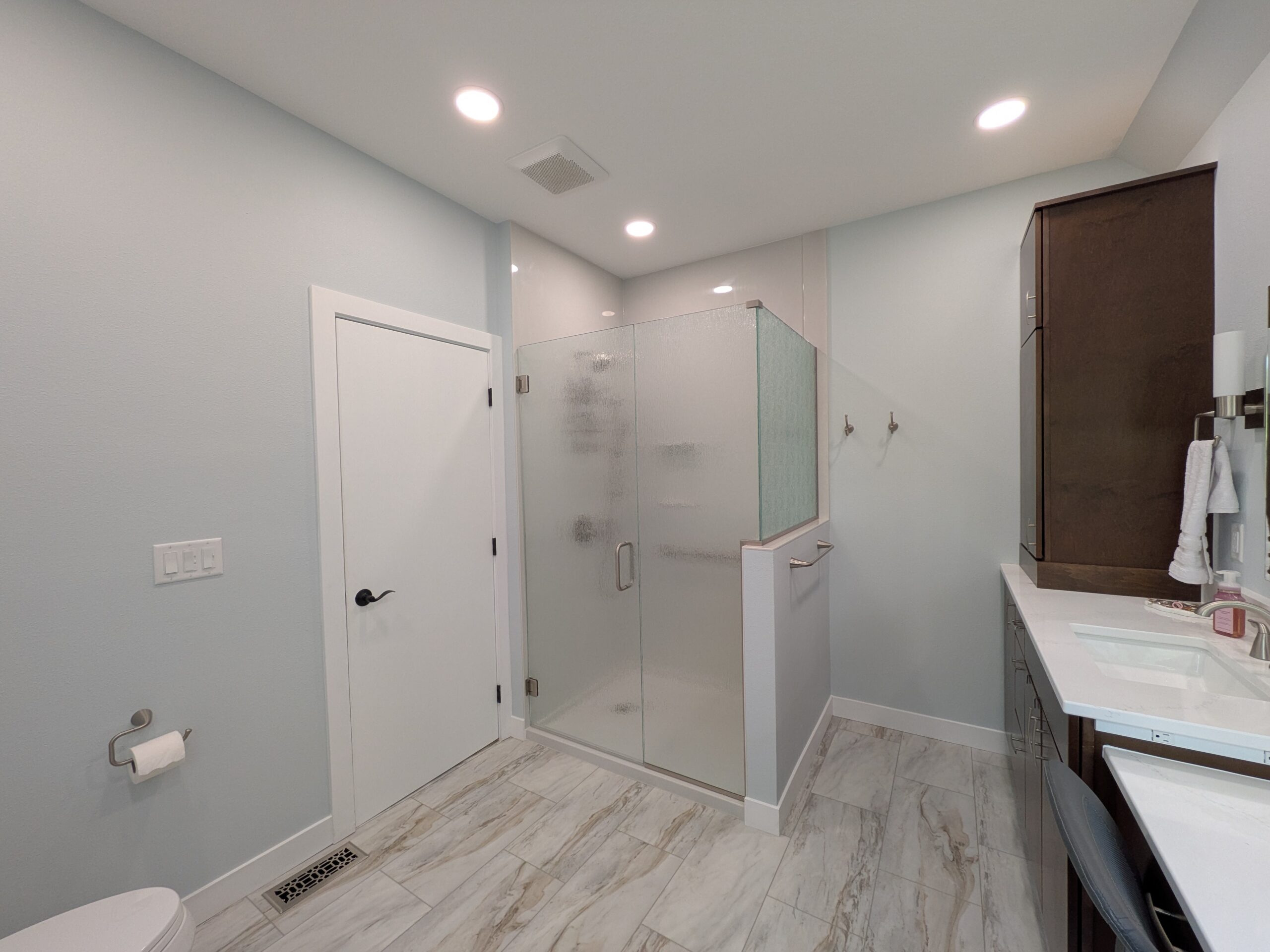
The corner jetted tub ate up a huge footprint and, like most jetted tubs we see, hadn’t been used in years. We pulled it, reframed the corner, and built a frameless glass walk-in shower with a tiled niche and a grab bar worked into the design from day one — not bolted on as an afterthought.
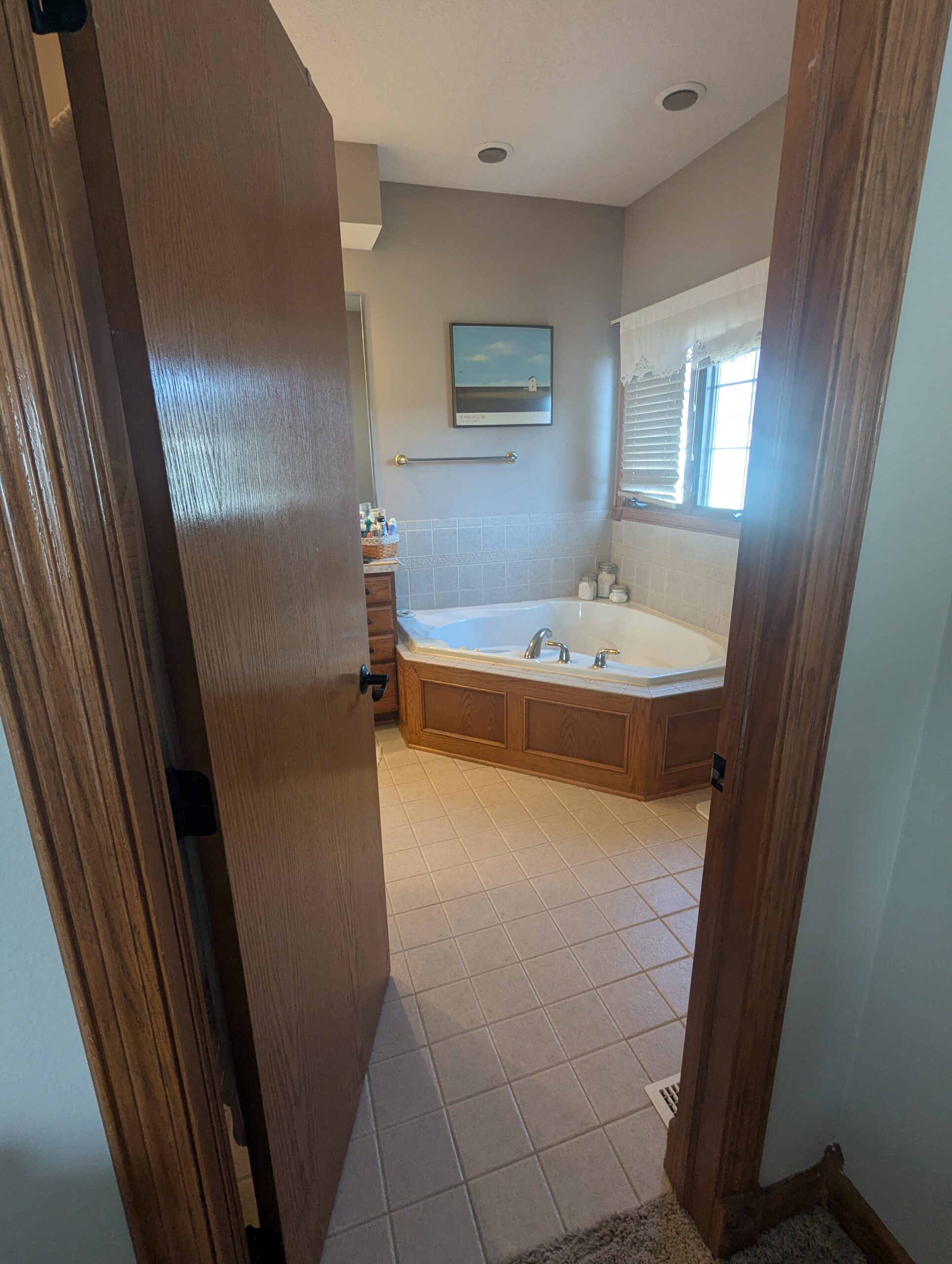
Dated corner jetted tub before the remodel
Before — the old corner jetted tub
New frameless glass walk-in shower after the remodel
After — a frameless glass walk-in shower

The Vanity

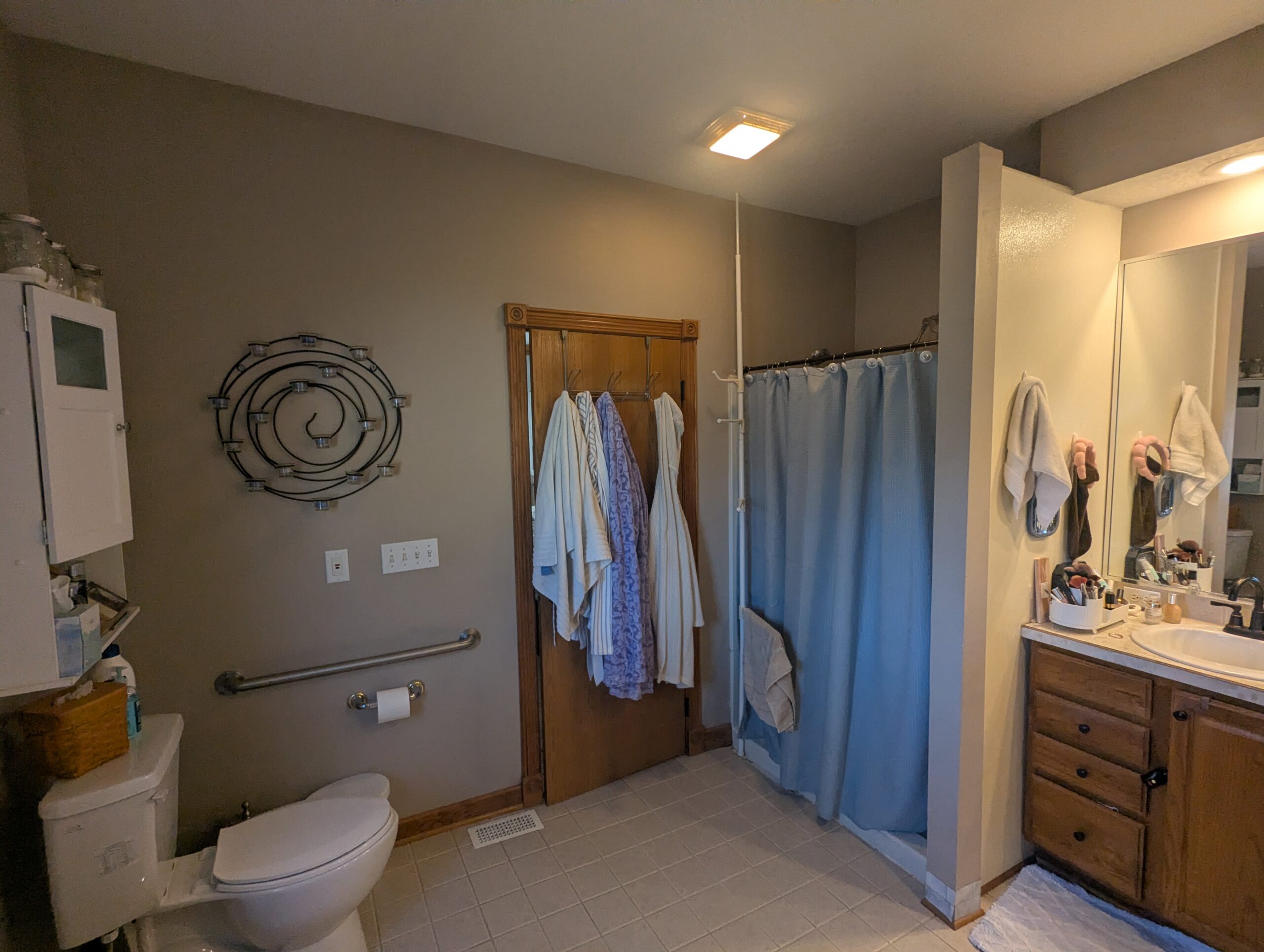
The old vanity ran two people into one sink at a time on a cramped laminate counter. The new layout gives each person their own vanity with a quartz counter, plus a sit-down makeup desk in between — a small addition that gets used every single day.
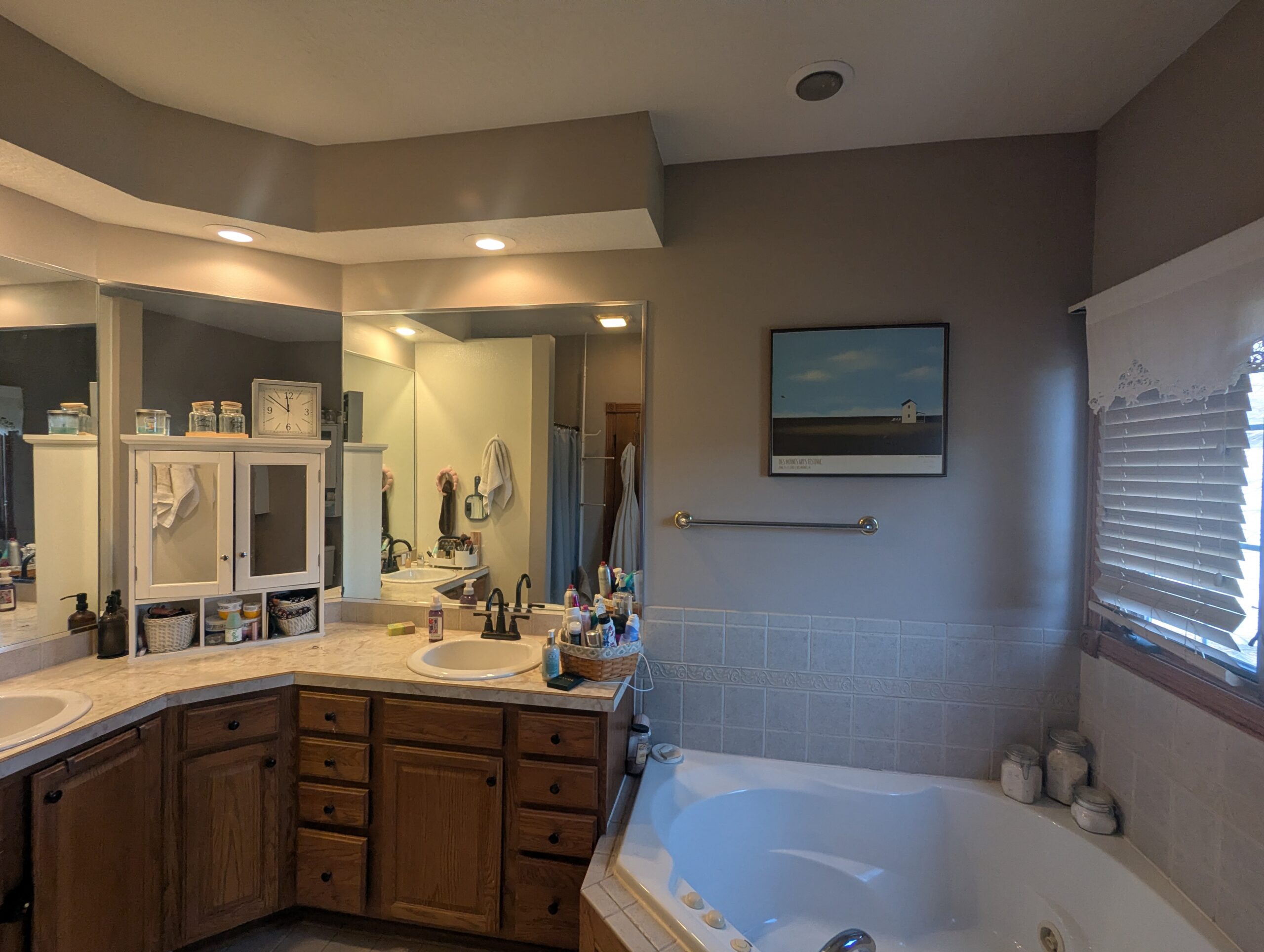
Old corner vanity with laminate counter before the remodel
Before — the old corner vanity
New quartz vanity after the remodel
After — a quartz vanity with real storage

The Details

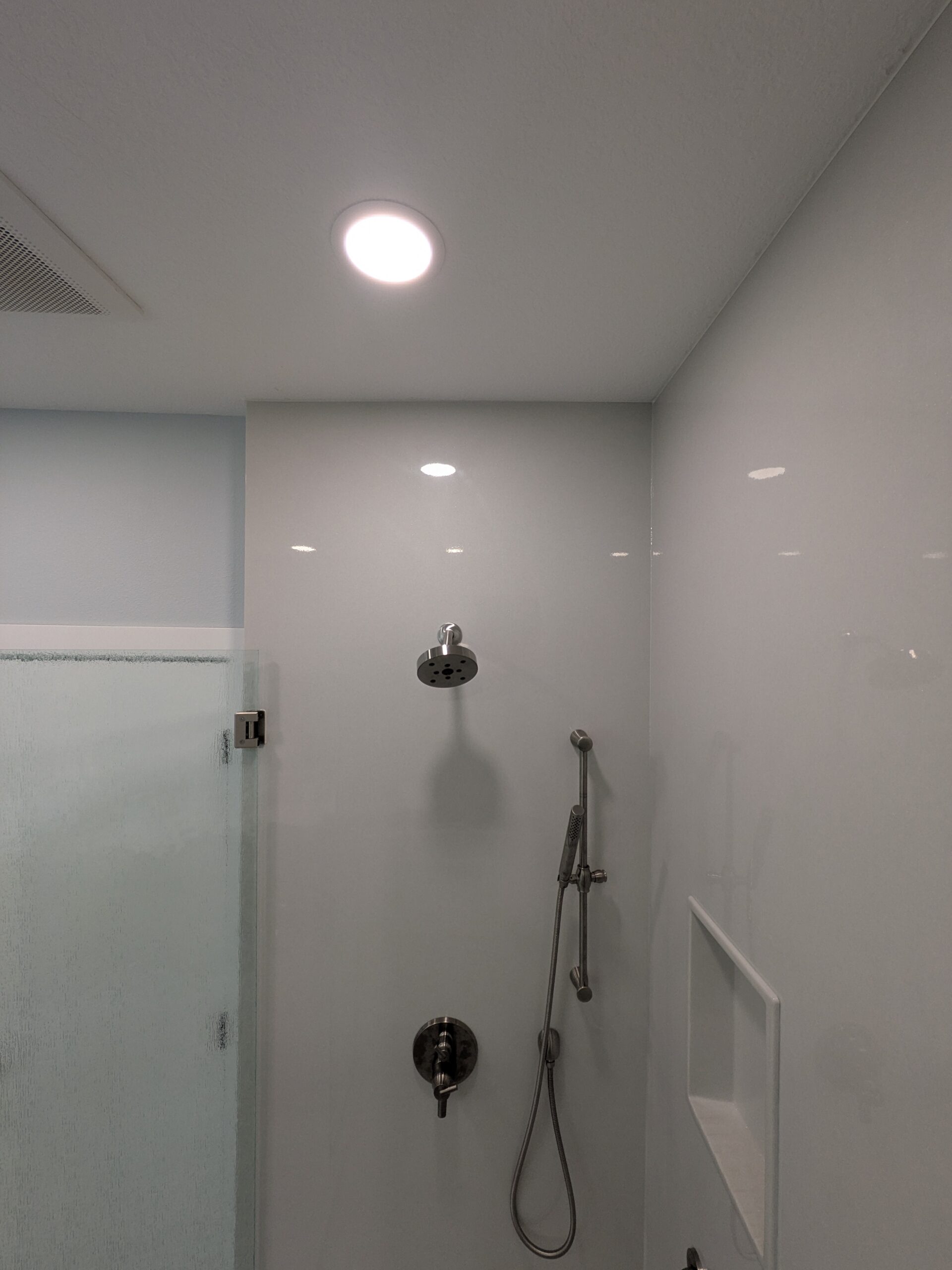
Brushed nickel fixtures throughout, a tiled shower niche instead of a wire caddy, and a slide-bar handheld shower head. Nothing flashy — just fixtures that hold up and still look right ten years from now.
Old shower and fixtures before the remodel
Before — the old shower and fixtures
New shower fixtures and tiled niche after the remodel
After — brushed nickel fixtures and a tiled niche
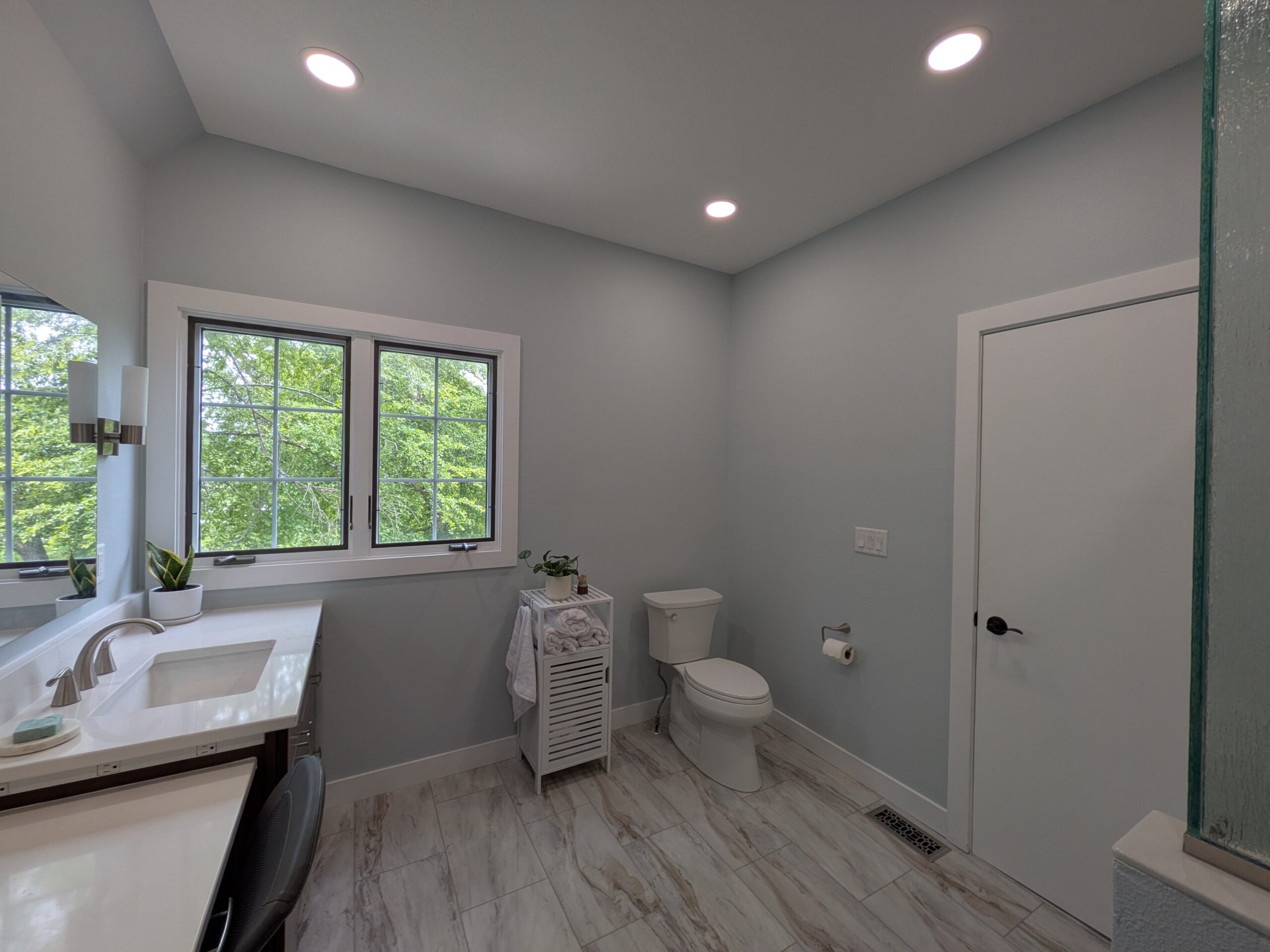
The finished master bathroom
The finished room

Projects like this one are why we do full gut remodels — not just because a bathroom looks dated, but because the layout usually isn’t working for the people using it every day. If your master bath has a tub nobody uses or a vanity that’s too small to share, we’d be glad to take a look and tell you honestly what’s worth changing.

Get a walkthrough of your own remodel →

What to Expect During a Remodel With Soap Stone Construction

If this is your first time hiring a contractor, the process itself can feel like the biggest unknown — bigger, sometimes, than the project itself. Here’s what actually happens, step by step.

1. The consultation

We walk the space with you, talk through what you want out of the project, and get a feel for scope. This is also when we flag anything that might affect cost early — plumbing that will need to move, load-bearing walls, electrical panel capacity — so there aren’t surprises later.

2. The proposal

You get a written estimate with a clear scope of work, not a vague “starting at” number. If permits are required, we handle that process rather than leaving it to you to navigate the city or county office.

3. Scheduling

We give you a real start date and a realistic timeline — and we show up on it. It sounds like a low bar, but it’s consistently one of the top things homeowners tell us they didn’t get from previous contractors.

4. The build

You’ll know what’s happening and when. Work areas are kept contained and cleaned at the end of each day where possible — living through a remodel is disruptive enough without construction dust following you into the rest of the house.

5. The walkthrough

Before we call a project finished, we walk it with you. Anything that isn’t right gets fixed before final payment, not after.

Why this matters more than it sounds

Nearly every complaint homeowners have about remodels traces back to communication, not craftsmanship — not knowing when a crew is coming, not knowing why a timeline slipped, not knowing what a change actually costs before it’s already been done. A predictable process is what prevents most of that.

Three ways to start

Depending on how involved you want to be, you can hire our crew outright, get one-on-one coaching if you’re doing some of the work yourself, or set up ongoing maintenance once a project wraps. Schedule a consultation to talk through your specific project.

Fall Home Maintenance Checklist for Central Iowa Homeowners

Iowa winters are hard on a house. The homeowners who avoid expensive surprises in February are almost always the ones who spent an afternoon in October checking these items.

Outside the house

  • Clean gutters and downspouts. Clogged gutters in winter mean ice dams, and ice dams mean water finding its way somewhere it shouldn’t.
  • Check caulking around windows and doors. Gaps here are one of the biggest sources of winter heat loss — and one of the cheapest fixes if caught early.
  • Inspect the roof for loose or damaged shingles before the first heavy snow puts weight and ice on top of a problem you didn’t know you had.
  • Drain and store outdoor hoses, and shut off exterior spigots if your home has a separate shutoff — a frozen and burst hose bib is a common, avoidable repair.

Inside the house

  • Have the furnace serviced before you need it running every day. A fall tune-up is far cheaper than an emergency call in January.
  • Test smoke and carbon monoxide detectors and replace batteries — CO risk goes up as furnaces and fireplaces get used more.
  • Check attic insulation levels. Thin or settled insulation is one of the most common reasons heating bills spike every winter.
  • Reverse ceiling fans to clockwise rotation to push warm air back down from the ceiling.

Easy to forget, expensive to skip

  • Chimney inspection, if you have a working fireplace or wood stove.
  • Sump pump check, especially with a battery backup test — a power outage during a winter storm is exactly when you don’t want to find out it’s not working.
  • Sealing driveway or walkway cracks before freeze-thaw cycles make them worse.

Doing this every season, without the mental overhead

Most of this is manageable in a weekend if you know what to look for — and that’s exactly where our DIY Coaching program can help if anything on this list turns up a bigger issue than expected.

If you’d rather not track this yourself every year, Soap Stone Home Care handles seasonal maintenance on a set schedule, so these items get checked before they become a problem — not after.

Home Remodeling in Waukee, IA: What Homeowners Should Know

Waukee has been one of the fastest-growing communities in Central Iowa for years, which means a mix of newer subdivisions and an older downtown core — and very different remodeling needs depending on which one you’re in.

Permits in Waukee

Waukee requires permits for most electrical, plumbing, and structural work, including many kitchen and bathroom remodels. If your project involves moving a wall, adding square footage, or relocating plumbing, plan on a permit review before work starts. This isn’t a formality to skip — it protects you at resale and keeps your homeowner’s insurance valid if something goes wrong later.

What’s different about newer vs. older Waukee homes

Homes in the newer developments tend to have more standardized layouts, which can actually make remodels faster and more predictable to price. Older homes closer to the historic downtown area more often need updates to wiring or plumbing as part of any bigger project — worth factoring into your budget before you fall in love with a specific finish package.

Typical timelines

  • Cosmetic refresh (counters, backsplash, fixtures): 2–3 weeks
  • Mid-size kitchen or bathroom remodel: 4–6 weeks
  • Additions or full layout changes: 2–4 months, depending on permitting and weather

Iowa winters can add delays to exterior work and additions, so timing a project for spring or summer start dates tends to keep things moving faster.

Working with a local crew

A contractor who already knows Waukee’s permitting office and inspection process can shave real time off a project — there’s a learning curve to every municipality’s process, and it’s one less thing you have to manage yourself.

Keeping it running afterward

Once a remodel wraps up, Soap Stone Home Care offers seasonal maintenance visits so small issues (caulking, grout, HVAC filters, gutter checks) get caught before they turn into bigger repairs — particularly useful for newer Waukee homes still settling in their first few years.

If you’re planning a project in Waukee or anywhere nearby, schedule a consultation and we’ll walk the space with you.

5 Things to Check Before You DIY a Bathroom Remodel

Bathrooms are one of the most popular DIY remodel projects — and one of the easiest to get expensively wrong. Before you rip out that old tub, here are five things worth checking first.

1. What’s actually behind the walls

Older Central Iowa homes — especially anything built before the 1990s — can have galvanized plumbing, outdated wiring, or subfloor damage hiding behind a perfectly normal-looking wall. You won’t know until you open it up, which is exactly why it’s smart to have a contractor take a look before you commit to a full tile order.

2. Whether your project needs a permit

Most municipalities in Central Iowa require permits for plumbing and electrical work, even in a bathroom remodel that looks purely cosmetic. Skipping this isn’t just a legal risk — it can also come back to bite you at resale, when an inspector or buyer’s agent asks for permit history that doesn’t exist.

3. Waterproofing, not just tile

A beautiful tile job over improperly waterproofed substrate will fail — sometimes in months, sometimes in a couple of years. Waterproofing membrane, proper slope to the drain, and correct fastener choice matter more than the tile pattern itself. This is the step most DIYers underestimate.

4. Ventilation

An underpowered or poorly vented exhaust fan is one of the most common causes of mold and peeling paint in Iowa bathrooms, given our humidity swings between seasons. If you’re already opening up the ceiling, it’s the cheapest time to fix this.

5. Your actual timeline tolerance

DIY bathroom remodels reliably take longer than planned — often 2 to 3x the initial estimate once you factor in one bathroom being unusable the whole time. If you only have one bathroom in the house, this is worth thinking through before demo day.

Where a coaching session helps most

You don’t have to choose between “fully DIY and hope for the best” and “hire it all out.” Our DIY Coaching program pairs you with a licensed contractor for the planning stage, permit paperwork, and the trickiest steps — waterproofing, plumbing rough-in, tile layout — while you do the rest yourself. Most homeowners save 30–50% off full-service pricing this way.

If a walkthrough reveals more going on behind the walls than expected, our Hire a Pro crew can also step in for all or part of the project — no hard sell, just an honest read on what’s actually needed.

Kitchen Remodel Cost in Central Iowa: What to Expect in 2026

If you’re starting to plan a kitchen remodel anywhere around Panora, Ankeny, Waukee, or the greater Des Moines metro, the first question is almost always the same: what’s this actually going to cost?

The honest answer is “it depends” — but that’s not very useful when you’re trying to set a budget. So here’s a realistic breakdown based on the kinds of projects we see most often in Central Iowa homes.

Refresh-level remodel: $20,000–$35,000

This tier covers new countertops, a tile backsplash, updated fixtures, fresh paint, and sometimes new cabinet fronts or hardware without moving plumbing or electrical. It’s the fastest way to modernize a dated kitchen without touching the layout, and it’s usually done in two to three weeks.

Mid-range remodel: $70,000–$95,000

This is the most common range we quote. It typically includes new cabinets, countertops, flooring, lighting, and appliances, plus some electrical and plumbing work if you’re relocating a sink or adding an island. Expect four to six weeks from demo to final walkthrough.

Full remodel or layout change: $85,000+

Once you start moving walls, relocating gas lines, or expanding the footprint, costs climb quickly — but so does the impact. This is where you see the dramatic before-and-afters: opening a kitchen into a living space, adding a large island, or reconfiguring the whole workflow of the room.

What actually moves the price

  • Cabinets are usually the single biggest line item — stock vs. semi-custom vs. custom can swing the budget by tens of thousands of dollars.
  • Countertop material matters more than people expect. Laminate, quartz, and natural stone all land in very different price brackets.
  • Moving plumbing or gas lines adds cost fast, even for small layout changes.
  • Permits are required for most electrical and plumbing work in Central Iowa municipalities — factor that into your timeline, not just your budget.

Two ways to get there

Not everyone wants (or needs) a fully outsourced remodel. If you’re comfortable doing some of the labor yourself but want a licensed contractor’s eyes on the plan, permits, and tricky steps, our DIY Coaching program is built for exactly that — you save on labor, we make sure it’s done right. If you’d rather hand the whole thing off, our Hire a Pro crew handles it start to finish, on a set timeline, with a fixed quote.

Getting an accurate number for your project

National average calculators don’t account for Iowa labor rates, permitting requirements, or the age of housing stock in towns like Waukee, Ankeny, or West Des Moines. The only way to get a number you can actually plan around is a walkthrough. Schedule a consultation and we’ll give you a straight answer — no upsell, no inflated “starting at” number designed to get you in the door.

Hello world!

Welcome to WordPress. This is your first post. Edit or delete it, then start writing!